
Exercise After Prostate Cancer Surgery: What a New Study Reveals About Your Survival Odds
A major new study finds that vigorous physical activity after prostate cancer surgery can cut your risk of recurrence by 61% — but only if you had surgery, not radiation.

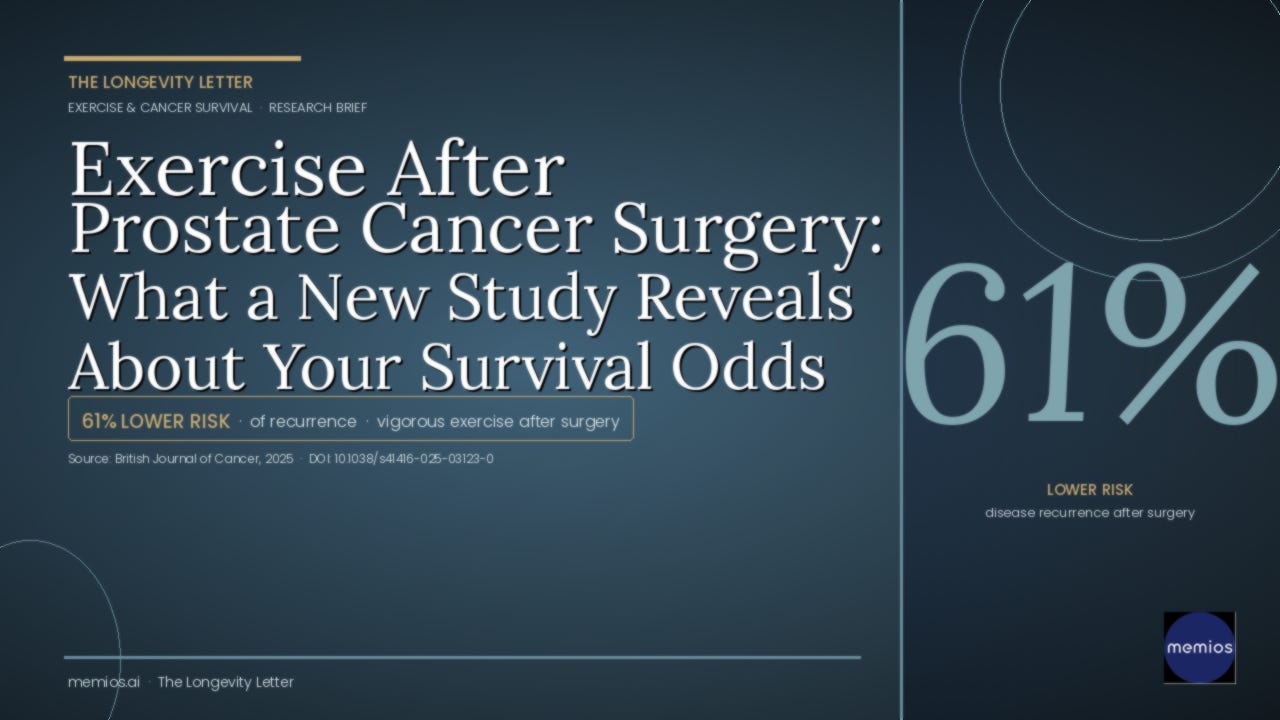
If you or someone you love has been diagnosed with prostate cancer, this article is one you need to read. A new peer-reviewed study published in the British Journal of Cancer has found that exercise after prostate cancer surgery is directly linked to dramatically better survival outcomes — specifically a 61% reduction in the risk of disease recurrence, progression, or death. But here’s the critical part: that benefit appears only in men who had surgery. Men who received radiation therapy saw no survival benefit from vigorous exercise at all.
That’s not a small distinction. It could reshape how physicians and patients think about exercise as part of cancer treatment — and it matters deeply if you are navigating a prostate cancer diagnosis right now, or supporting a father, husband, brother, or friend who is.
I’m Andrew Wilson. I founded memios after my own melanoma diagnosis in 2022 and after watching my father fight Multiple Myeloma and Amyloidosis while also supporting my best friend through Stage IV Melanoma. Cancer has been a relentless teacher in my life. One of the clearest lessons I’ve learned is that what you do after a diagnosis — how you move, how you fuel your body, how you show up every single day — matters more than most people realize.
This study confirms that in a striking way. Let’s break it down together.
What the Study Actually Looked At
This research was a secondary analysis of the Alberta Prostate Cancer Cohort Study, conducted by researchers from the University of Alberta, Yonsei University in South Korea, and the University of Calgary. The cohort originally included 988 men in Alberta, Canada with newly diagnosed, clinically significant prostate cancer (stage T2 or greater). After the initial case-control phase, 830 men were enrolled in a prospective cohort follow-up study that tracked their physical activity and health outcomes from 2000 through 2014.
That’s a 14-year follow-up. This isn’t a short-term snapshot — this is a long, careful look at what happens to real men over real time.
The researchers wanted to answer a question that most exercise and cancer studies have never directly addressed: Does it matter what cancer treatment you received when it comes to whether exercise improves your survival odds?
Most prior studies have treated cancer treatment as a background variable — something to control for statistically, not something to examine as a potential factor that changes how effective exercise is. This team took a different approach. They used the EXACT Framework (Exercise as Cancer Treatment) and the EPiCC Framework (Exercise Across the Postdiagnosis Cancer Continuum), two newer clinical frameworks designed specifically to study exercise as a legitimate cancer treatment — not just a wellness add-on.
The primary treatments in the study were:
Surgery (radical prostatectomy) — 245 men
Radiation therapy — 366 men
Hormone therapy (androgen deprivation therapy, or ADT) — analyzed as a third treatment modifier
Physical activity was measured at multiple time points using a validated questionnaire called the Lifetime Total Physical Activity Questionnaire (LTPAQ). It captured recreational, occupational, and household activity — including intensity levels. The researchers tracked three levels of activity:
Recreational PA — leisure-time activity like walking, cycling, and swimming
Vigorous PA — any activity at 6 METs (metabolic equivalents) or higher, meaning your heart and lungs are working hard
Total PA — everything combined
They tracked three survival outcomes:
Disease-free survival — survival without recurrence, progression, second cancer, or death from any cause
Prostate cancer-specific disease-free survival — survival without prostate cancer recurrence, progression, or prostate cancer death
Overall survival — survival without death from any cause
The Numbers That Should Stop You in Your Tracks
Let me give you the headline finding first, because it deserves to stand on its own.
Among men who had surgery for prostate cancer, those who engaged in any vigorous physical activity after their diagnosis were:
61% less likely to experience a recurrence, progression, second cancer, or death compared to men who did no vigorous exercise.
The hazard ratio was 0.39 (95% CI = 0.27–0.57). In plain language, that’s a powerful, statistically significant result. It held up even after adjusting for age, cancer stage, Gleason score, PSA levels, smoking history, comorbidities, and other treatments received.
For context, a hazard ratio of 0.39 means that for every disease event that occurred in the no-exercise group, only 0.39 events occurred in the exercise group. That’s not a modest benefit. That’s the kind of number that makes oncologists and researchers take notice.
The Kaplan-Meier survival curves — the visual representation of survival over time — told the same story. Among surgical patients, disease-free survival at the end of the study period was 57.9% in the exercise group versus 32.0% in the no-exercise group. That’s a 25-percentage-point gap in survival outcomes. Real people. Real lives.
Now here’s what makes this study particularly important for decision-making: the radiation therapy group showed no benefit at all.
Among men who received radiation therapy, vigorous exercise after diagnosis had a hazard ratio of 1.14 (95% CI = 0.88–1.47) — meaning essentially no association with improved disease-free survival. The difference in survival curves between exercisers and non-exercisers in the radiation therapy group was statistically flat (p = 0.80).
The interaction between vigorous physical activity and surgery was statistically significant (p < 0.001). The interaction between vigorous PA and radiation therapy was also significant (p = 0.003). These are not random findings.
The Prostate Cancer-Specific Results Are Just as Striking
When the researchers zoomed in on prostate cancer-specific outcomes — cutting out deaths and events unrelated to prostate cancer — the pattern held and actually got stronger.
Among surgical patients:
Men doing more than 13 MET-hours per week per year of recreational PA after diagnosis were 54% less likely to have a prostate cancer-specific event (HR = 0.46, 95% CI = 0.29–0.73)
Men doing any vigorous PA after diagnosis were 62% less likely to have a prostate cancer-specific event (HR = 0.38, 95% CI = 0.23–0.61)
The survival curves for prostate cancer-specific outcomes in the surgery group showed a wide and persistent gap between exercisers and non-exercisers: 73.8% vs 57.0% (p = 0.002).
Again, in the radiation therapy group, there was no statistically significant difference based on vigorous exercise.
If you had surgery for prostate cancer and you are not exercising vigorously, these numbers suggest you may be leaving one of the most powerful recovery tools on the table.
Why Does Treatment Type Matter So Much?
This is the part of the study that requires some deeper thinking — and the researchers did a thoughtful job of exploring possible explanations.
Surgery and radiation do fundamentally different things to your body and to any remaining cancer cells.
Radical prostatectomy removes the entire prostate gland, the seminal vesicles, surrounding tissue, and sometimes nearby lymph nodes. It is generally offered to younger, healthier patients with a life expectancy of at least 10 years. In the study cohort, the median age at diagnosis in the surgery group was 64 years.
Radiation therapy focuses external beams of radiation on the prostate — and sometimes the entire pelvic region, including lymph nodes — to destroy cancer cells in place. It tends to be offered to older patients or those with comorbidities that make surgery riskier. In the cohort, the median age in the radiation therapy group was 69 years.
That age difference matters. Older patients typically have more comorbidities and lower physical activity levels. And indeed, the median postdiagnosis vigorous PA in the surgery group was 0.4 hours per week per year, versus 0.0 hours per week per year in the radiation therapy group. The radiation group was simply moving much less overall — which makes it harder to detect an exercise benefit even if one exists.
But age alone doesn’t explain the entire picture. The researchers point to several biological and clinical mechanisms.
The Surgical Stress Response Theory
One compelling explanation comes from preclinical breast cancer research. A recent study in mice found that exercise significantly increased metastasis-free survival — but only in animals treated with surgery. The reason? Surgery creates a physiological stress response. It can inadvertently activate dormant micrometastases or residual cancer cells at the surgical site by disrupting normal immune surveillance and tissue healing.
Exercise, particularly vigorous exercise, may counteract that stress response. It mobilizes natural killer cells, reduces systemic inflammation, lowers insulin and IGF-1 levels, and creates an environment that is hostile to cancer cell survival and spread. After surgical resection, there may be a window of heightened biological vulnerability — and vigorous exercise may be exactly what closes that window.
The Micrometastases Question
After surgery, there is a higher potential for micrometastases — tiny clusters of cancer cells that may have spread to other tissues before the primary tumor was removed. These cells are present but not yet causing detectable disease. Up to 30% of prostate cancer recurrences are pelvic rather than systemic, and the risk of micrometastatic spread after surgical excision may be higher than after radiation treatment that targets the pelvic field.
Exercise may directly reduce the viability and proliferation of these micrometastases. It alters the tumor microenvironment through systemic effects — circulating factors like adrenaline, lactate, and immune cells that flood the body during vigorous activity may actively suppress micrometastatic activity.
The ADT Interaction
There is another important clinical difference between the surgery and radiation groups: their rates of androgen deprivation therapy (ADT).
In the surgery group, only 35.9% of men received hormone therapy. In the radiation therapy group, 75.4% did.
ADT is a powerful systemic treatment. It suppresses testosterone — a key driver of prostate cancer growth. When radiation and ADT are combined, they may deliver a synergistic anti-cancer effect that leaves less biological “space” for exercise to demonstrate additional benefit. The cancer may already be sufficiently suppressed that adding vigorous exercise doesn’t move the needle further.
Conversely, in surgical patients who are not receiving ADT, any remaining micrometastatic disease may be more dependent on the systemic environment — an environment that vigorous exercise can meaningfully shift.
The data offered a suggestive hint here: there were borderline statistically significant interactions (p < 0.10) suggesting that patients not treated with ADT tended to benefit more from vigorous PA than those who received ADT — for both disease-free survival and prostate cancer-specific disease-free survival. This is preliminary, but it points toward a real and clinically meaningful interaction.
What “Vigorous Exercise” Actually Means
Before you start wondering whether a Sunday afternoon walk counts, let’s be precise about what the study classified as vigorous physical activity.
Vigorous PA in this study was defined as any activity with a metabolic equivalent (MET) value of 6 or higher. METs measure how much energy your body is using relative to rest.
Activities at or above 6 METs typically include:
Jogging or running (even at a moderate pace)
Cycling at a brisk pace (not a leisurely cruise)
Swimming laps with real effort
Aerobics or fitness classes that get your heart rate up
Singles tennis
Heavy yard work like digging or hauling
Vigorous hiking with elevation gain
Rowing or paddling with effort
Competitive sports at most levels
The threshold in the study for benefit was simply any vigorous PA versus none. You did not need to be running marathons. The surgery group’s median was only 0.4 hours per week per year — a modest amount. Men who did any vigorous activity above zero had dramatically better outcomes than men who did none at all.
This is encouraging. You do not need to transform yourself into an elite athlete. You need to consistently do things that are genuinely hard — activities that challenge your heart, lungs, and muscles. Thirty minutes of vigorous exercise, several days a week, may be the threshold that matters.
A Broader Pattern in Exercise Oncology
This study fits into a larger and growing body of evidence that exercise is not just a lifestyle recommendation for cancer survivors — it may be a genuine treatment modality in its own right.
The researchers cite a systematic review and meta-analysis by Friedenreich et al. that examined physical activity and cancer outcomes across multiple cancer types. For prostate cancer specifically, the results of four studies showed that higher postdiagnosis PA was associated with a 30% lower risk of prostate cancer-specific mortality (HR = 0.70; 95% CI = 0.55–0.90).
A parallel study in colorectal cancer survivors found that physical activity after surgery — either surgery alone or surgery plus chemotherapy and/or radiotherapy — was associated with reduced mortality risk (HR = 0.75 to 0.84). Notably, the benefit appeared in patients who had surgery. This is a consistent pattern across cancer types: exercise may play its most important role in the postoperative, post-treatment period.
The Alberta cohort itself had previously found that postdiagnosis recreational PA was associated with a significantly lower risk of death from prostate cancer overall (HR: 0.56; 95% CI, 0.35–0.90). The new secondary analysis builds on that finding by showing that the treatment modality shapes whether exercise can exert that benefit.
This is the direction exercise oncology is moving: toward precision. Not just “exercise is good for cancer survivors” but “which exercise, after which treatment, at which time, in which patients?”
What This Means If You’ve Had Prostate Cancer Surgery
If you have undergone a radical prostatectomy, the message from this study is direct and actionable:
Getting up and moving vigorously after surgery is one of the most powerful things you can do for your long-term survival.
This doesn’t mean ignoring your surgeon’s recovery timeline. Immediately after radical prostatectomy, you need time to heal, and there are important restrictions around activity, lifting, and returning to exercise. Most men spend 4–6 weeks in initial recovery before they are cleared for progressively more demanding exercise.
But once you are cleared, and especially beyond the first year after surgery, building a consistent vigorous exercise habit deserves the same priority you give to your PSA monitoring appointments, your dietary choices, and your follow-up care.
Here’s a practical framework to think about:
Phase 1: Early Recovery (Weeks 1–6 post-surgery)
Follow your surgeon’s specific guidance
Focus on walking — start with 10–15 minutes and build gradually
Pelvic floor exercises (Kegels) are often recommended and do not require medical clearance after basic instruction
Light movement throughout the day to prevent blood clots
Phase 2: Rebuilding (Months 2–6 post-surgery)
Progressively increase walking duration and pace
Begin light resistance training if cleared
Introduce low-impact aerobic activity: cycling, swimming, elliptical
Target 150 minutes per week of moderate activity minimum
Start introducing some vigorous intervals if your body is responding well
Phase 3: Active Recovery and Long-Term Maintenance (Month 6 onward)
Build toward 75–150 minutes of vigorous activity per week
Strength training 2–3 times per week to combat muscle loss (especially important if you are also on ADT, which accelerates muscle wasting)
Activities that push your heart rate well above baseline
Consistency matters more than perfection
Always talk with your physician before starting or changing any exercise program after prostate cancer surgery.Your individual situation — including whether you received additional ADT, your surgical margins, your current PSA trajectory, and any comorbidities — should guide the details of your program.
What This Means If You Received Radiation Therapy
The study found no statistically significant benefit from vigorous exercise in the radiation therapy group. This does not mean exercise is harmful or useless for men who received radiation. It means the study did not detect the same dramatic survival benefit seen in the surgical group.
There are several reasons to continue exercising after radiation:
Quality of life during and after radiation is improved with regular physical activity
Fatigue — one of the most common side effects of radiation therapy — is reduced by exercise
Cardiovascular health — particularly important if you are on ADT, which increases metabolic syndrome risk
Muscle mass preservation — ADT causes muscle loss and fat gain; strength training directly counteracts this
Bone density — ADT dramatically accelerates bone loss; weight-bearing and resistance exercise helps maintain bone density
Mental health — anxiety, depression, and loss of identity are common after prostate cancer treatment; exercise is one of the most evidence-based interventions for all three
The absence of a detected survival benefit in the radiation group does not mean exercise is irrelevant. It means the study’s sample size may not have been large enough to detect a more subtle benefit, and it means the biology of exercise interacting with radiation is more complex — and not yet fully understood.
Future studies with larger samples, more detailed treatment data, and longer follow-up periods will likely refine our understanding of the optimal timing, type, and dose of exercise for radiation therapy patients.
The Deeper Point About Exercise as Medicine
My personal journey has taught me something important: the medical system is designed to treat your cancer. It is rarely designed to help you thrive after treatment.
The oncologist’s job is to get the cancer. Surgeons remove tumors. Radiation destroys cells. Hormone therapy suppresses androgen. These are lifesaving tools. But they leave you with a body that has been through enormous stress — and a future that depends significantly on what you do in the years after treatment.
Studies like this one are the scientific backbone of a broader movement to treat exercise not as a nice-to-have but as a genuine clinical intervention — something that deserves the same attention as chemotherapy dosing, radiation field planning, or surgical technique.
The EXACT Framework and EPiCC Framework — developed by several of the authors of this study — are frameworks designed specifically to bring exercise into the clinical oncology conversation with rigor and precision. They call for studying exercise the way we study drugs: What is the dose? What is the timing? What is the mechanism? What patient population benefits most?
This study is a direct output of that framework. And it is exactly the kind of evidence that will eventually change how oncologists counsel their patients after surgery.
For now, the practical truth is this: if you have had prostate cancer surgery, and you are not already exercising vigorously on a regular basis, you have an opportunity in front of you that the data says is worth taking seriously.
Study Limitations Worth Knowing
This is a well-conducted study. The researchers are transparent about its limitations, and you deserve to know them.
Sample size constraints. The study had 245 men in the surgery group and 366 in the radiation therapy group. This limited the researchers’ ability to analyze treatment combinations rather than individual modalities. A larger sample might have revealed additional nuance.
Postdiagnosis PA is a weighted average. The physical activity data was collected at three follow-up intervals and averaged over time. This means the researchers could not pinpoint the optimal window of exercise — immediately before treatment, during treatment, immediately after treatment, or years later. The study captures “did you exercise after diagnosis” but not “when exactly, and at what dose.”
Cohort era. The men in this study were diagnosed and treated in the late 1990s. Prostate cancer management has evolved significantly since then — particularly in surgical techniques, radiation delivery, and the use of ADT. Today’s patients may have different baseline outcomes and different opportunities for exercise benefit.
No detailed treatment data. The researchers did not have data on whether surgeries included pelvic lymph node dissection, or whether radiation therapy included whole pelvic irradiation. These distinctions could matter biologically.
Observational design. This is not a randomized controlled trial. Men who exercised vigorously after surgery may have been healthier, more health-conscious, or more compliant with their overall medical care — factors that could partially explain their better outcomes. The researchers adjusted for many potential confounders, but residual confounding cannot be ruled out entirely.
These limitations do not undermine the findings. They point to the need for larger, more precisely designed trials — which the authors specifically call for in their conclusion.
Practical Takeaways
Let me summarize the most useful things to carry with you from this study.
If you are a prostate cancer survivor who had surgery:
Vigorous exercise after your diagnosis was associated with a 61% lower risk of disease recurrence, progression, or death
Any vigorous activity above zero showed benefit — you don’t need to be an athlete
Build toward activities at 6+ METs (jogging, cycling, swimming laps, fitness classes)
Consistency over time matters — this was a weighted average of postdiagnosis activity, not a short-term sprint
Talk to your physician about an appropriate return-to-exercise plan
If you are a prostate cancer survivor who had radiation therapy:
The study did not detect a survival benefit from vigorous exercise in your treatment group
Exercise is still strongly recommended for quality of life, fatigue, cardiovascular health, bone density, and mental well-being
ADT side effects (muscle loss, bone loss, metabolic changes) are specifically countered by exercise
Future research may clarify whether and when exercise improves survival in your group
If you are supporting a family member or friend with prostate cancer:
Ask their oncologist about exercise recommendations during and after treatment
Help them understand the difference between treatment modality and how it affects exercise benefit
Vigorous movement — after recovery — may be one of the most important things they can do
If you are not currently facing prostate cancer but are a man over 50:
This study is another reason to build vigorous physical activity into your life now, before you ever need it for cancer recovery
Your current habits set the baseline your body will work from if cancer ever enters the picture
Exercise benefits don’t appear overnight — they are built through years of consistent effort
My Personal Take
When I read studies like this one, I think about my father. He was diagnosed with Multiple Myeloma and Amyloidosis — two diseases at once, each serious on its own. Watching him navigate treatment, I saw how much the non-medical choices mattered. How he moved, how he slept, how he ate, how he stayed connected to purpose and community.
I also think about my best friend, who has lived with Stage IV Melanoma. He has made exercise a cornerstone of his survival strategy — not because any single study told him to, but because it is the one thing in a sea of uncertainty that he can control and take ownership of.
That’s what this research points toward, too. Not a guarantee. Not a cure. But a meaningful, measurable, evidence-based action that may shift the odds in your favor.
For men who’ve had prostate cancer surgery: your recovery doesn’t end when you leave the hospital. In many ways, it begins there. And the evidence increasingly suggests that vigorous physical activity — sustained, consistent, and progressive — may be one of the most powerful tools you have for what comes next.
Move with purpose. Build it back gradually. But build it.
Frequently Asked Questions
1. What type of exercise is most beneficial for prostate cancer survivors who had surgery?
The study focused on vigorous physical activity — defined as exercise at 6 or more metabolic equivalents (METs). This includes activities like jogging, brisk cycling, swimming laps, vigorous hiking, aerobics classes, and similar efforts. Any amount of vigorous activity was associated with better outcomes compared to none at all. Recreational activity (moderate intensity) also showed benefit for prostate cancer-specific survival in surgical patients, though vigorous activity showed the strongest association.
2. How soon after prostate cancer surgery can I start exercising?
This depends on your individual recovery, the type of surgery, and your surgeon’s specific guidance. Most men begin with walking in the first weeks after surgery and gradually increase intensity over several months. Vigorous exercise is typically not appropriate until you are well past initial healing — often 6 weeks minimum, and sometimes longer. Always get specific clearance from your surgical team before returning to vigorous exercise.
3. Why didn’t exercise help prostate cancer patients who had radiation therapy?
The researchers identified several possible explanations. Radiation therapy patients in the study were older (median age 69 vs 64 in the surgery group) and had much lower baseline physical activity levels. Additionally, radiation therapy patients were more likely to receive hormone therapy (ADT) — 75% vs 36% in the surgery group. ADT combined with radiation may provide a synergistic treatment effect that limits the additional benefit exercise can offer. There are also biological differences in how surgery versus radiation affects residual cancer cells and the tumor microenvironment.
4. Does this mean exercise is not beneficial if I had radiation for prostate cancer?
Not at all. Exercise is well-documented to improve quality of life, reduce treatment-related fatigue, preserve muscle mass, protect bone density (critical for men on ADT), and support cardiovascular health for all prostate cancer patients regardless of treatment type. The study simply did not detect the same dramatic survival benefit in the radiation group. Future research may reveal specific exercise benefits in that group as well.
5. What is vigorous physical activity and how do I know if I’m doing it?
Vigorous activity is typically defined as exercise at 6+ METs. A practical guide: if you can speak a few words but cannot hold a full conversation, you are likely in vigorous territory. Your heart rate should be elevated significantly — typically 70–85% of your maximum heart rate. Activities like walking briskly would be moderate, not vigorous. Jogging, cycling uphill, swimming laps, or doing a challenging fitness class would typically qualify as vigorous.
6. How much vigorous exercise is needed to see a benefit?
The study used an “any versus none” comparison for vigorous PA, meaning the benefit was observed in men who did any amount of vigorous activity compared to those who did none. The surgery group’s median postdiagnosis vigorous activity was only 0.4 hours per week per year — a modest amount. Current general health guidelines recommend at least 75 minutes of vigorous activity per week for overall health benefits, and this is a reasonable target for cancer survivors to work toward after recovery.
7. Does this apply to other types of cancer, or just prostate cancer?
This specific study focused on prostate cancer. The broader principle — that exercise effects on cancer survival may depend on what treatments were received — has also been observed in colorectal cancer research. A Korean study of over 43,000 colorectal cancer survivors found that exercise was associated with lower mortality primarily in those who had surgery. Exercise oncology researchers are actively studying this interaction across multiple cancer types.
8. Should exercise be considered a formal part of prostate cancer treatment?
The researchers and the frameworks they cite (EXACT and EPiCC) explicitly propose that exercise should be studied and prescribed with the same rigor as other cancer treatments — including attention to timing, dose, and combination with other therapies. While current clinical practice does not yet formally prescribe exercise as a cancer treatment in most settings, the evidence base is growing. Oncologists and rehabilitation specialists are increasingly incorporating exercise recommendations into survivorship care plans.
9. What about prediagnosis exercise — does it matter?
The study found that prediagnosis physical activity was generally not significantly associated with disease-free or overall survival outcomes in this cohort. The stronger and more consistent associations were seen with postdiagnosis exercise — particularly vigorous exercise after surgery. This doesn’t mean prediagnosis fitness doesn’t matter, but it suggests that what you do after your diagnosis may matter more than what you did before.
10. Where can I find a medically supervised exercise program for prostate cancer survivors?
Ask your oncologist or urologist for a referral to an oncology rehabilitation specialist or a certified exercise physiologist with oncology experience. Many cancer centers now have dedicated cancer exercise programs. The American College of Sports Medicine’s ACSM ProEx certification identifies fitness professionals with cancer exercise training. Some hospitals offer structured programs specifically for prostate cancer survivors, particularly around managing ADT side effects.
Additional Information
Primary Study Reference
An, K.-Y., Jeon, J.Y., Arthuso, F.Z., Wang, Q., Friedenreich, C.M., & Courneya, K.S. (2025). Postdiagnosis physical activity is associated with improved survival in prostate cancer patients treated with surgery but not with radiation therapy. British Journal of Cancer. DOI: https://doi.org/10.1038/s41416-025-03123-0
Related Studies and References
Physical activity and prostate cancer survival — foundational cohort study: Friedenreich, C.M., Wang, Q., Neilson, H.K., Kopciuk, K.A., McGregor, S.E., & Courneya, K.S. (2016). Physical activity and survival after prostate cancer. European Urology, 70, 576–585. https://doi.org/10.1016/j.eururo.2015.12.032
Exercise and cancer mortality — systematic review and meta-analysis: Friedenreich, C.M., Stone, C.R., Cheung, W.Y., & Hayes, S.C. (2020). Physical activity and mortality in cancer survivors: A systematic review and meta-analysis. JNCI Cancer Spectrum, 4, pkz080. https://doi.org/10.1093/jncics/pkz080
Exercise as a cancer treatment — EXACT Framework: Courneya, K.S., & Booth, C.M. (2022). Exercise as a cancer treatment: A clinical oncology framework for exercise oncology research. Frontiers in Oncology, 12, 957135.https://doi.org/10.3389/fonc.2022.957135
EPiCC Framework — exercise across the postdiagnosis cancer continuum: Courneya, K.S., McNeely, M.L., Booth, C.M., & Friedenreich, C.M. (2024). An integrated framework for the study of exercise across the postdiagnosis cancer continuum. Frontiers in Oncology, 14, 1432899. https://doi.org/10.3389/fonc.2024.1432899
Physical activity after diagnosis and prostate cancer progression: Richman, E.L., Kenfield, S.A., Stampfer, M.J., Paciorek, A., Carroll, P.R., & Chan, J.M. (2011). Physical activity after diagnosis and risk of prostate cancer progression. Cancer Research, 71, 3889–3895. https://doi.org/10.1158/0008-5472.CAN-10-3932
Exercise and prostate cancer survival — Health Professionals Follow-up Study: Kenfield, S.A., Stampfer, M.J., Giovannucci, E., & Chan, J.M. (2011). Physical activity and survival after prostate cancer diagnosis. Journal of Clinical Oncology, 29, 726–732. https://doi.org/10.1200/JCO.2010.31.5226
Exercise in colorectal cancer survivors — Korean national cohort: Lee, M., Lee, Y., Jang, D., & Shin, A. (2021). Physical activity after colorectal cancer diagnosis and mortality in a nationwide retrospective cohort study. Cancers, 13, 4804. https://doi.org/10.3390/cancers13194804
Exercise after surgery in breast cancer preclinical model: Stagaard, R., Jensen, A., Schauer, T., Bay, M.L., Tavanez, A.R., Wielsoe, S., et al. (2025). Exercise boost after surgery improves survival in model of metastatic breast cancer. Frontiers in Immunology, 16, 1533798. https://doi.org/10.3389/fimmu.2025.1533798
Aerobic exercise, cancer initiation, progression, and metastasis — preclinical review: Ashcraft, K.A., Peace, R.M., Betof, A.S., Dewhirst, M.W., & Jones, L.W. (2016). Efficacy and mechanisms of aerobic exercise on cancer initiation, progression, and metastasis. Cancer Research, 76, 4032–4050. https://doi.org/10.1158/0008-5472.CAN-15-1427
NCCN Clinical Practice Guidelines — Prostate Cancer: https://www.nccn.org/guidelines/guidelines-detail?category=1&id=1459
AUA/ASTRO Guideline — Clinically Localized Prostate Cancer: https://www.auanet.org/guidelines-and-quality/guidelines/clinically-localized-prostate-cancer-aua/astro-guideline-2022
Further Reading and Resources
American Cancer Society — Prostate Cancer: https://www.cancer.org/cancer/types/prostate-cancer.html
Prostate Cancer Foundation: https://www.pcf.org
ACSM Guidelines for Exercise and Cancer: https://www.acsm.org/education-resources/trending-topics-resources/physical-activity-guidelines
Exercise and Cancer — National Cancer Institute: https://www.cancer.gov/about-cancer/treatment/side-effects/fatigue/exercise-pdq
Connect with memios
Website: https://www.memios.ai
Newsletter — The Longevity Letter:

Facebook: https://www.facebook.com/memiosai
About Cancer Fitness
Dr. Jay Harness is a board-certified cancer surgeon and the founder of Cancer Fitness. His work focuses on one core idea: exercise is medicine for cancer patients and survivors.
Research backs him up. Regular movement reduces recurrence risk, improves treatment outcomes, and rebuilds strength and quality of life.
Visit cancerfitness.org to learn more.
Disclaimer: memios shares wellness and longevity content for general education. We are not doctors, healthcare providers, or licensed medical professionals, and we do not provide medical advice, diagnosis, or treatment. We are health conscious individuals documenting what we learn and what we do as we work toward living long, healthy, strong lives into our 90s. Always talk with your physician or qualified healthcare professional before starting, changing, or stopping any exercise, nutrition, supplement, or health program.